



How to choose sheets?
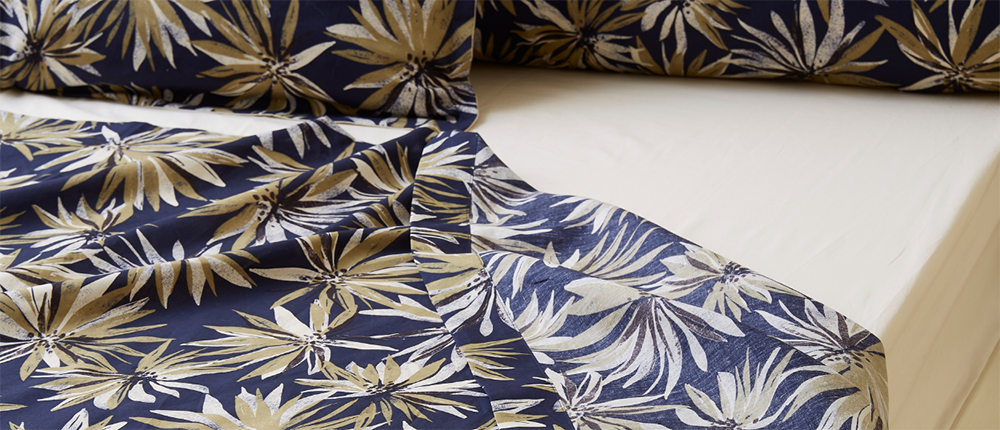
Do you feel overwhelmed by the wide variety of sheets available in the bed linen section of your favourite store?
No need to panic: Sylvie Thiriez offers you a buying guide to make choosing your new sheets easier.
Sheet types, materials, the healthiest options for sleeping — you’ll soon know it all and be able to choose bed sheets that suit both your needs and your preferences.
What are the different types of sheets?
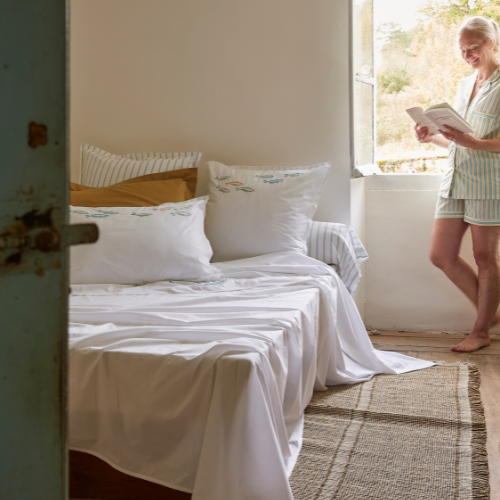
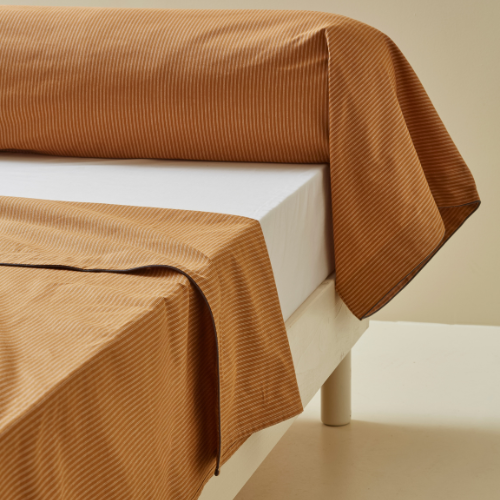
Bed sheets and fitted sheets are sometimes confused. A bed sheet, also known as a flat sheet, is used to protect the duvet cover, blanket or mattress from wear, dirt and perspiration. It can be placed either above or below the sleeper’s body. It is a sheet with many functions.
A fitted sheet, on the other hand, is designed to cover the mattress while preventing creases. Thanks to the elasticated sections located at its four corners, known as “pockets”, it fits perfectly around the mattress.
Bed sheets are available in multiple sizes depending on your mattress dimensions. For a small single bed, choose a 180x290 cm sheet; for a large single bed or standard double bed, a 240x310 cm model will be ideal; finally, for a queen or king size mattress, opt for a wide sheet measuring 270x310 cm.
In terms of style and colour, you’ll be spoiled for choice: collections are full of plain, printed or embroidered models in a wide range of shades. This makes it easy to match your flat sheet with the rest of your bedding set and your bedroom décor.
Which material should you choose for your sheets?
At Sylvie Thiriez, we have chosen to work exclusively with natural, high-quality textiles that guarantee strength and durability. We offer many models made from 57-thread-count cotton (sometimes referred to as 30x27 cotton), a fabric that is comfortable, easy to care for and affordable. You can wash and dry your cotton sheets regularly in the machine without worrying about damaging the fibres.
We recommend choosing 100% cotton sheets for your child’s bed. In general, check the thread count of the fabric: the higher it is, the more durable the material. For the spring–summer season, it can be wise to opt for stonewashed linen sheets (washed with lava stones), a light and breathable fabric also valued for its hypoallergenic and antibacterial properties. However, it is just as suitable for use throughout the rest of the year. In a higher range, 80-thread-count cotton percale and 71-thread-count washed percale are excellent choices. These ultra-soft and insulating materials help regulate body temperature, preventing you from feeling too cold or overheating during the night.
→ Learn more: Which material should you choose for your sheets?
Which sheets are the healthiest for sleeping?
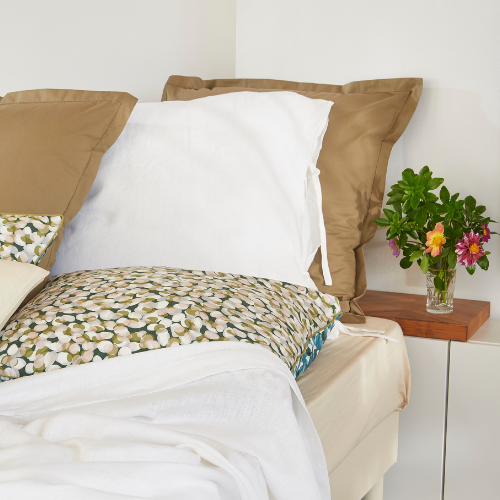
We recommend choosing sheets made from natural fibres. Although inexpensive, synthetic materials such as polyester tend to restrict air circulation and cause increased perspiration during the night. By choosing a model made from cotton, linen or percale, you will benefit from their thermoregulating properties and enjoy a peaceful night’s sleep.
Percale and washed percale sheets are particularly appreciated for their smooth, silky texture, which leaves a pleasant feeling of freshness on the skin. If you have sensitive skin or are prone to allergies, opt instead for a hypoallergenic model made from linen or cotton percale.
To keep your sheets clean and healthy, it is recommended to wash cotton or percale models weekly and linen sheets approximately every two weeks. Now that you know everything you need to carefully choose your new bed sheets, which Sylvie Thiriez model will you choose?
You may also be interested in these articles:
How to choose the right sheet size? | How to care for bed sheets? | What is a bed sheet?